
Commercial Metal Roof Coating
- Best On
- Ribbed and exposed-fastener panels on warehouses and shops
- Typical Work
- Screw replacement, lap stitching, rust primer, two coats
- Watch For
- Panels rusted through or loose from purlins
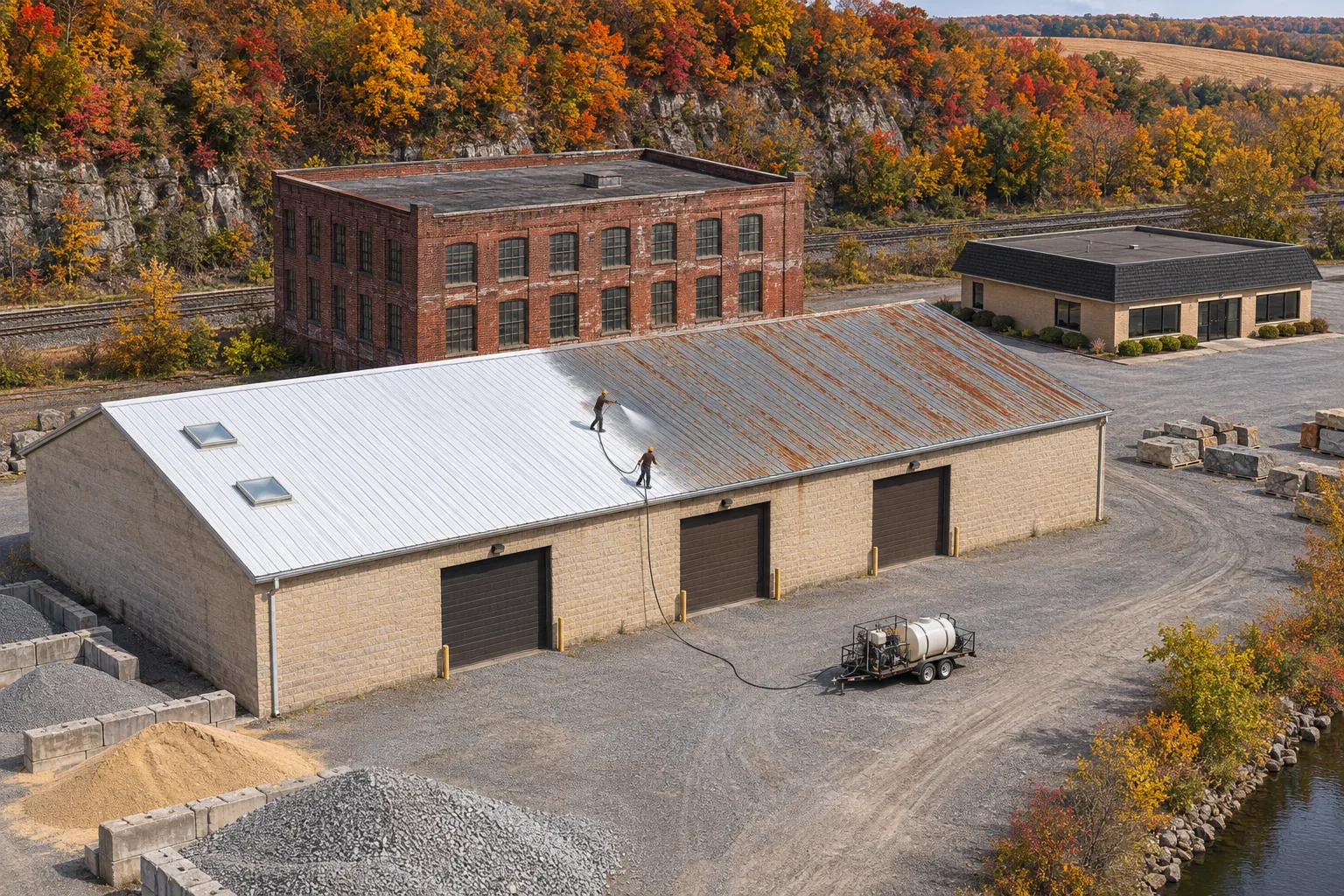
Easton metal roof coating starts with a walk over every panel. We fix screws, laps, rust, and flashing first, then coat the metal that holds.
Easton metal roof coating covers whatever sits under it, so these six problems get fixed first. Each row pairs what you see with its usual cause.
Rubber washers under exposed screws dry out and split after years of sun and freeze-thaw cycles, so water follows the screw shank inside.
We back out failed screws, fit oversized replacements where holes have widened, and seal every head before the first coat.
Side and end laps open slightly as panels swell in summer heat and shrink on cold nights, and wind pushes rain into the gap.
Laps get stitch screws, cleaned surfaces, and seam tape or mastic so the coating bridges a closed joint.
Snowmelt lingers longest at the low edge and under end laps, keeping bare steel wet after the old finish wears thin.
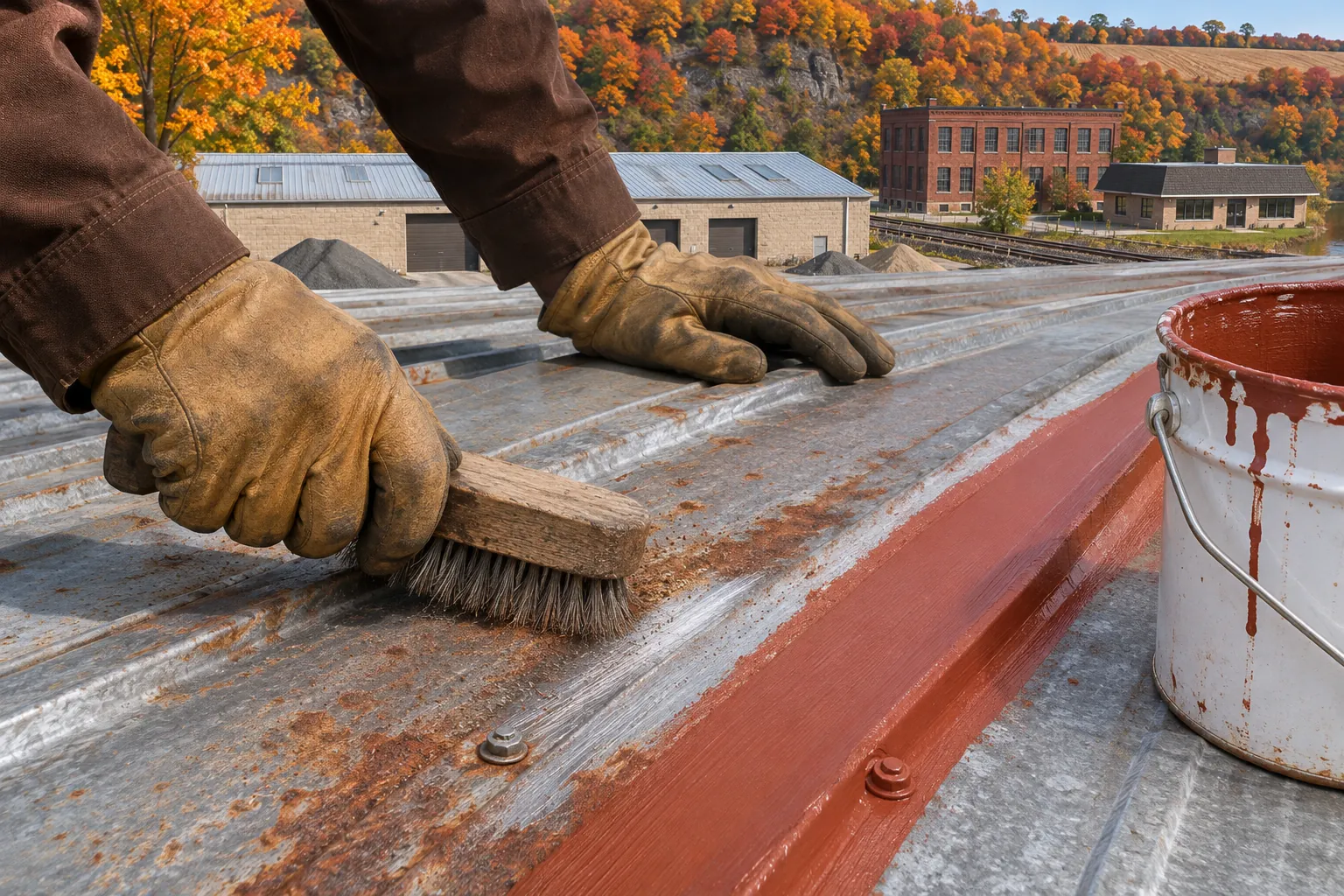
Loose scale comes off with wire brushes, bare steel gets a rust-inhibiting primer, and the eave line takes a heavier coat.
Curb flashing around fans, units, and vents cracks long before the panels fail, often after a service visit disturbs it.
Flashing at curbs and penetrations is rebuilt so the coating ties into sealed details instead of covering an open seam.
Ice packed in gutters and at drains blocks normal runoff, so meltwater climbs under panel ends during a thaw.
Gutter joints, outlets, and panel ends are checked on the walk and repaired before any coating goes down.
Earlier coatings lose their grip where moisture got under them or where they went over chalky, unwashed metal.
Loose coating is scraped back to a firm edge, adhesion is tested on what stays, and only material that still grips gets recoated.
Five steps in the same order on every roof, with repairs finished before the first coat.
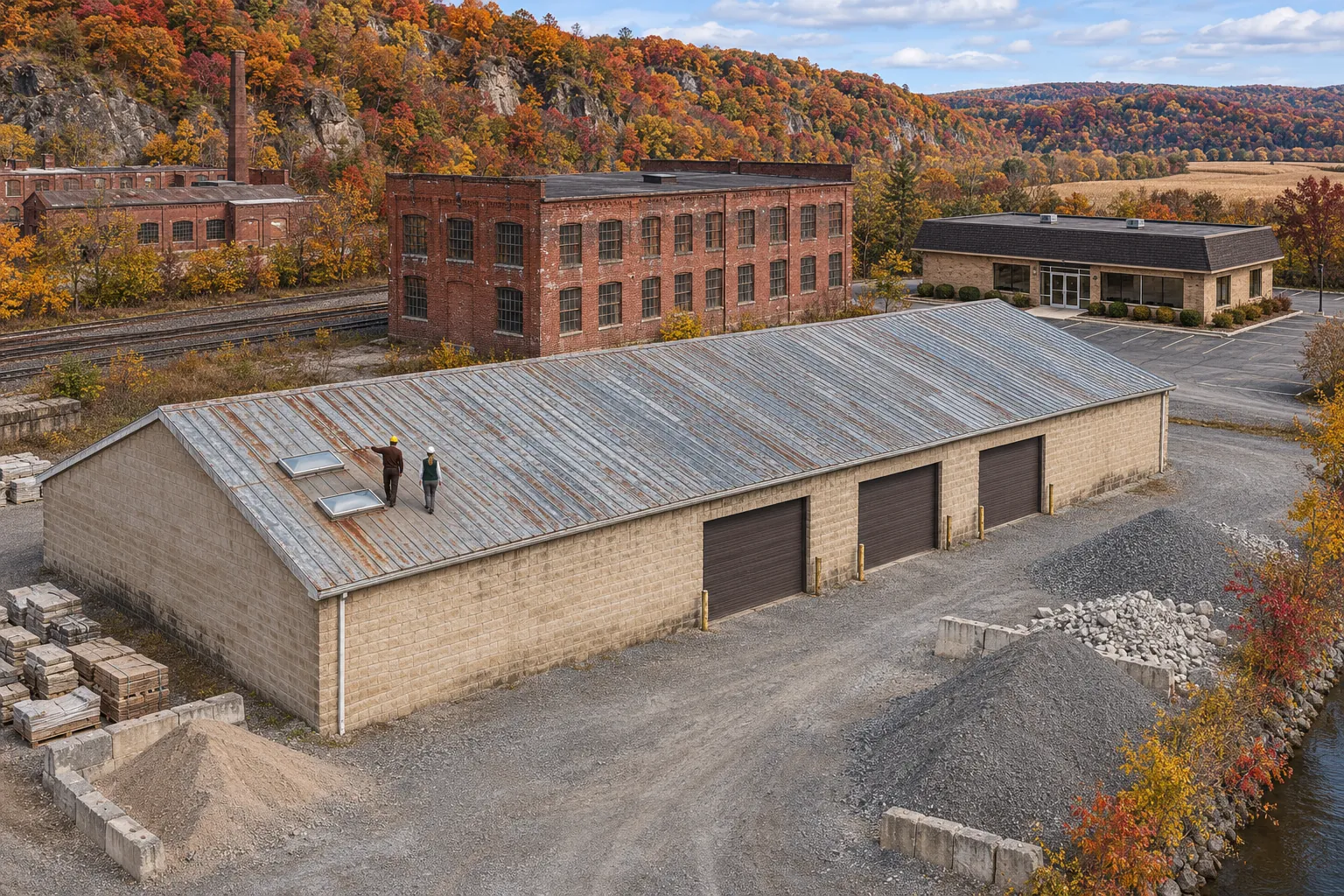
Every panel gets walked, and loose screws, open laps, rust, and cracked flashing are marked on a roof sketch. We also look inside so condensation never gets mistaken for a roof leak.
Failed screws come out, oversized ones go in, and loose laps are stitched tight. Panels rusted through are cut out and replaced with matching metal.
Pressure washing removes dirt, chalk, and oil so the coating can bond. Bare and rusted steel gets primer, and the roof dries fully before anything else goes on.
Seams, screw heads, curbs, and penetrations get sealant or reinforced seam treatment on a separate pass. These spots carry most of the leak risk on a metal roof.
Base and top coats go on at the thickness on the product data sheet, timed around temperature and overnight dew. We gauge the wet film as we go and finish edges by hand.
Each column lines up the same three facts for one system, so you can compare them side by side.

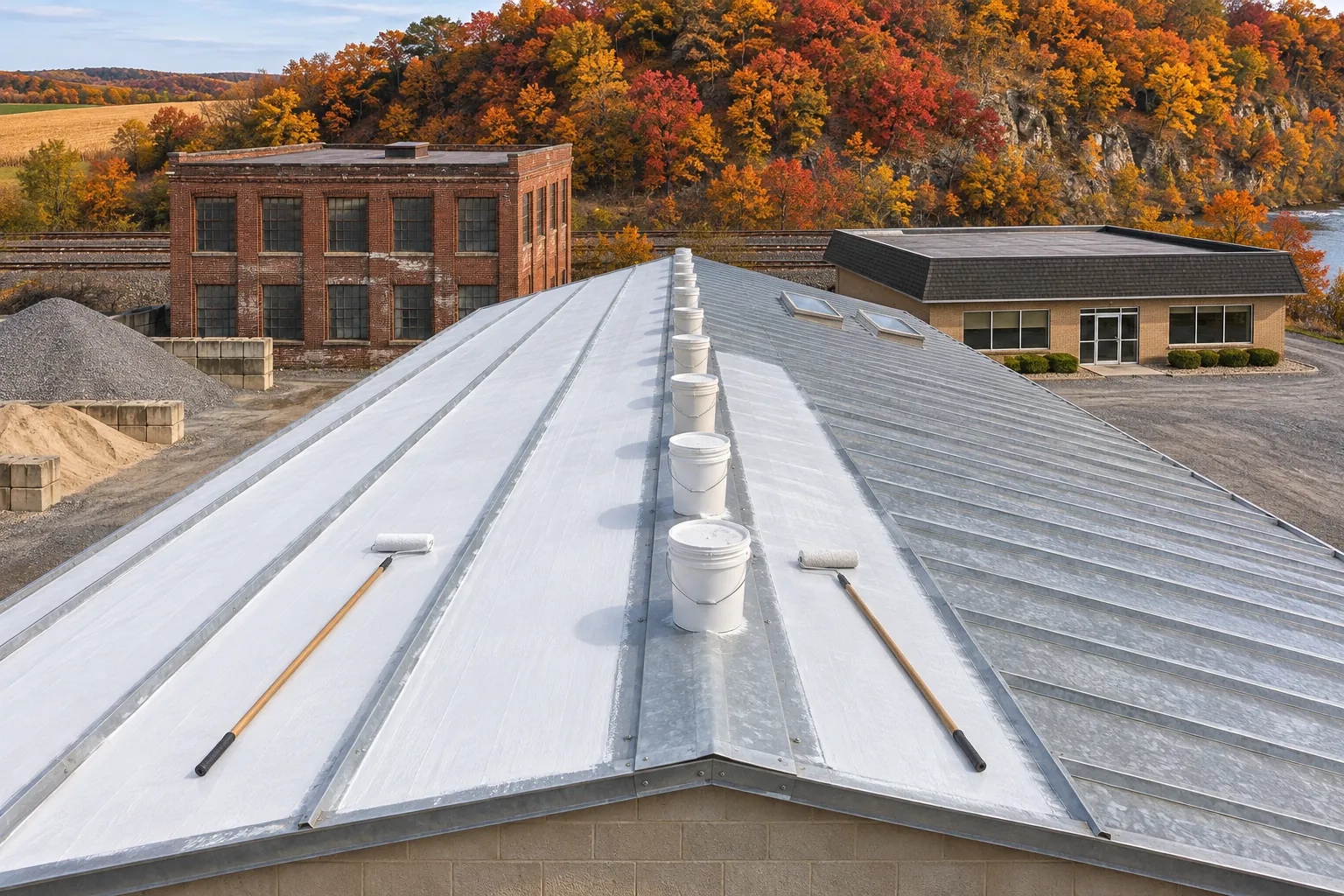
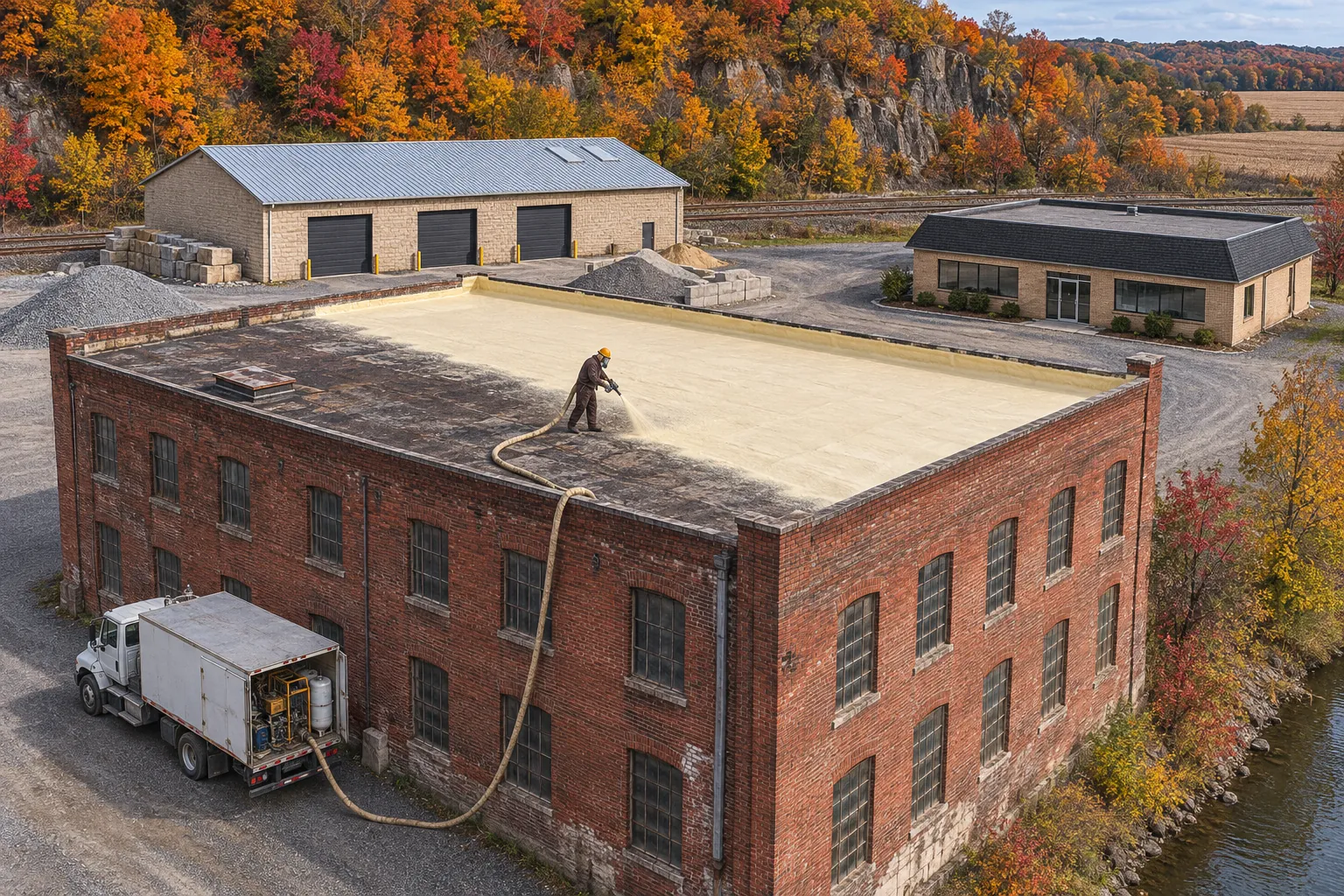
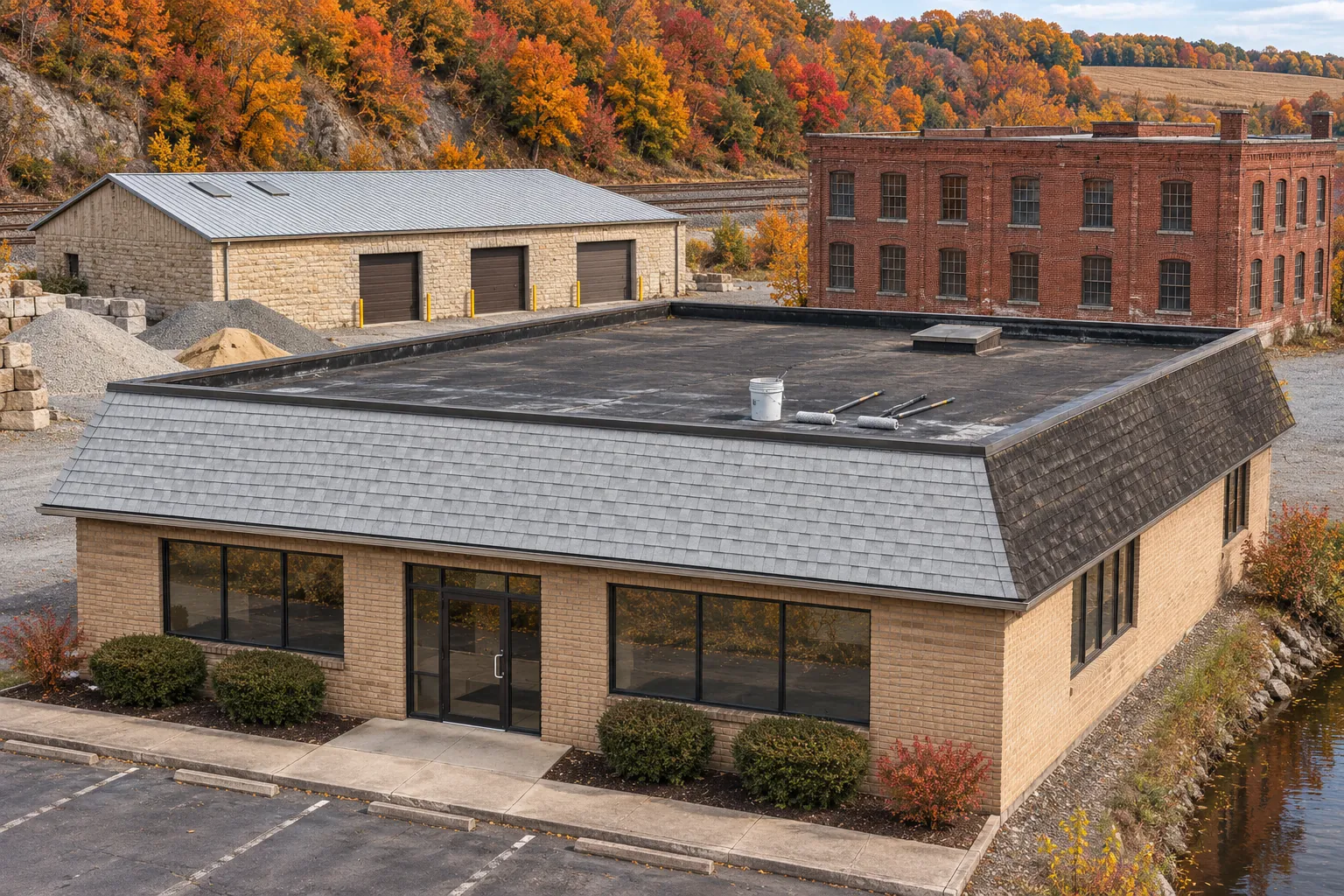
Fall still brings warm afternoons and dry decks. Tell us about the roof now and the walk and repairs can happen before the first hard freeze.
Most roofs land in one of these four places after the first walk. The right column names where the work starts.
Scale brushes off to firm steel and the screws take new washers, so the roof is ready for prep and two coats.
Low panels near units hold water for a day or more, which calls for a drainage check and a coating made for ponding.
A handful of drips at curbs or laps get traced first, and coating follows once those details are rebuilt.
Holes in many panels or loose purlins mean the metal itself needs replacing before any coating would help.
Here is the same roof before the work and after it, condition by condition.
We take metal roof coating work in Easton and five towns beyond it. Outside them? Call us or send us a message.
Warehouses here often carry several old finishes, so adhesion tests come before one coating system is proposed.
Equipment buildings with repaired panel laps get each repair checked for movement before coating covers it.
Low areas get traced to their cause, from clogged outlets to bent panels, before silicone is chosen.
Exhaust deposits around roof vents are cleaned off and the vent flashing repaired before coating reaches it.
Peeling coating is opened up and the metal under it checked for rust before any new layer goes on.
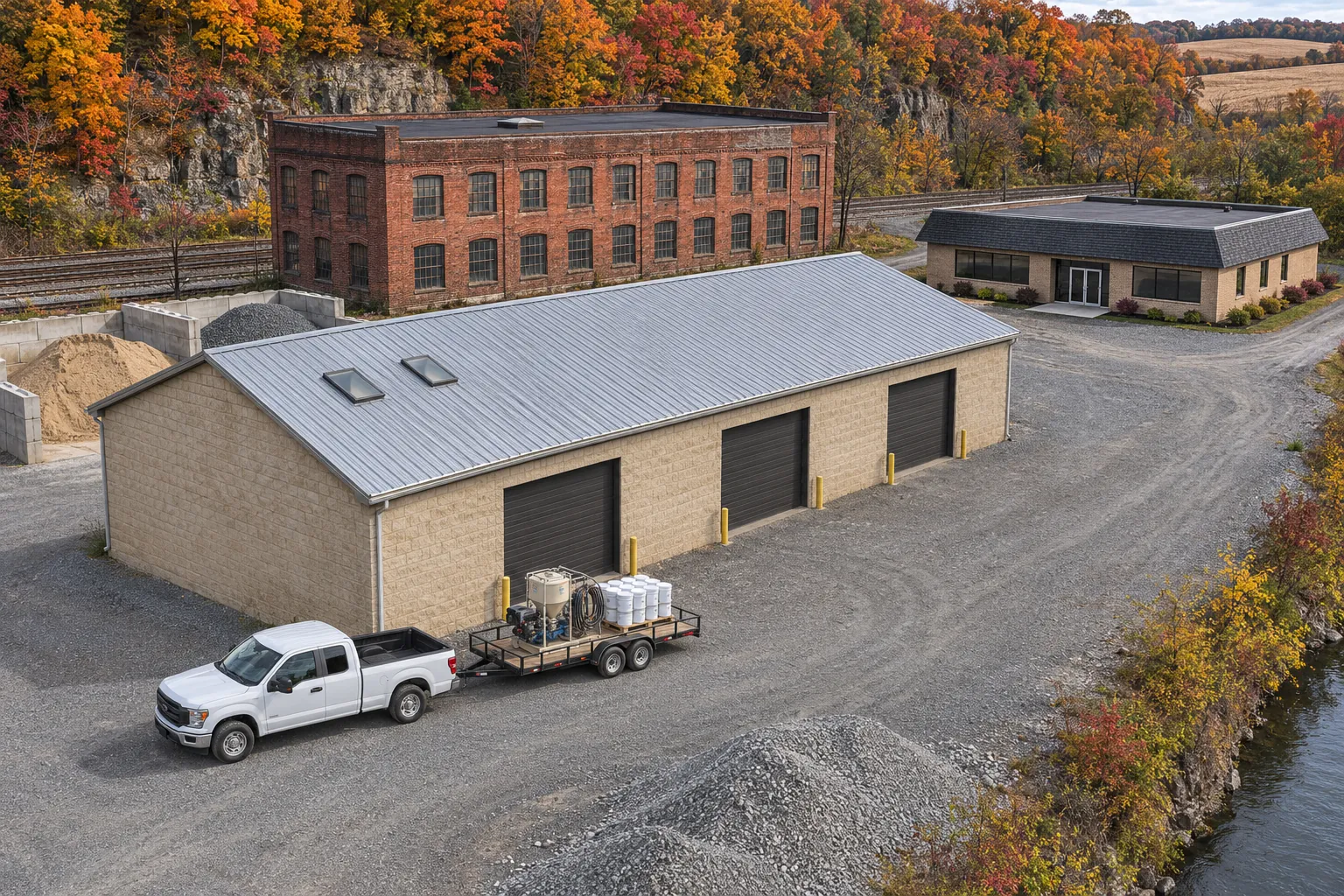
Question about your own roof?
Call UsPlan on roughly $2.50 to $4.00 per square foot of roof for coating, compared with roughly $5 to $8 per square foot to replace it. Where a roof lands in that range comes from its size and access, rust and seam prep, fastener sealing, coating type and thickness, the number of coats, and the flashing around penetrations.
It is when the panels are still attached and most of the metal is solid. Repairs plus coating keep the existing roof in service and close the leak paths at screws and laps. When rust has eaten through large areas, replacement is the better spend, and we say so after the walk.
Plan a recoat when the finish starts losing its grip, wears through to bare metal, or cracks at seams and fasteners. Dirt on a firm coating only needs washing. We check what remains of the old coating and the steel under it, especially where earlier patches could be hiding moisture or rust.
Yes, once the connections hold. Screws, washers, and laps on farm and equipment buildings get checked first, because stored grain and livestock add moisture under the panels. Equipment can usually stay inside while we work, as long as repairs at panel openings are planned with protection below.
Usually, with the work areas set around the plant process. Air intakes, open product, and access to running equipment decide the order of sections, and some repairs at roof openings need the space below closed off for a short time. We plan that with the plant manager before cleaning starts.
Ice at gutters or drains blocks runoff, so meltwater backs up and finds weak seams. After a thaw we walk the water paths and check laps and flashing that freeze-thaw movement has worked loose. Heavy wet snow is also a load question for a qualified engineer, separate from how the coating looks.
Tell us about the building and the leaks you have seen. We walk the roof, show you what needs repair, and give you a plain plan for coating it.